
Sustainable pace: training events, workshops, talks, and coaching
Do you feel as if you're constantly behind, juggling too many commitments, struggling to focus, and ending the day exhausted? Or like everything is important, and the next thing has to be started before the previous one is fully done? If this sounds familiar, it's time to look at sustainable pace.
Recent feedback from trainings and events
-
“Very clear and concise training with plenty of practical examples and tips as well as theoretical background.”
-
“Great practical tips on working at a sustainable pace! Very enjoyable training session and highly engaging.”
-
“External speaker Sami Paju was the best seen so far for this kind of topic, and the topic itself was very inspiring.”
What it’s about
Sustainable Pace in Knowledge Work is a research-backed, practical body of work that helps individuals and teams understand why knowledge work is so demanding — and what they can actually do about it. The same root causes lead to exhaustion and burnout, as well as ineffectiveness and lacklustre productivity. By addressing these root causes, we can improve outcomes for both organisations and individuals.
The starting point is what everyone needs to understand about how our brains work: the interplay between long-term memory and working memory, the limitations of conscious attention, what happens when we're constantly interrupted or juggling too many open tasks, and why the vicious cycle of stress and exhaustion is so hard to break. This matters because understanding why something doesn't work is what makes practical changes stick.
From there, we move towards solutions by working through the six principles of sustainable pace — a practical framework that forms a modern theory of effectiveness for modern-day knowledge work. The principles are grounded in research, but the focus is always on what's actionable: what you can do when you get back to your desk. The same principles apply to teams and organisations, not just individuals.
Who it’s for
Finding ways to work at a sustainable pace is valuable for any knowledge worker — software developers, researchers, consultants, managers, analysts, project managers, or anyone whose job involves sustained thinking, problem-solving, communication, and decision-making.
It's especially relevant when:
Your team is stretched thin and struggling to deliver quality work consistently.
People feel perpetually busy but aren't sure what they're actually accomplishing.
Burnout or disengagement is becoming a concern.
You want to address wellbeing and performance at the same time, not trade one for the other.
What participants get
A clear understanding of why knowledge work is cognitively demanding, and what that means for how work should be organised.
Practical approaches to task management, work planning, prioritisation, focus, and maintaining high energy.
Familiarity with six concrete principles that guide work habits and practices towards effectiveness, productivity, and impact — in a manner that can be sustained over the long term. These principles can be used to improve how individuals, teams, and whole organisations work.
A shared language and framework within the organisation for understanding effectiveness and what makes workloads sustainable.
For organisations, the benefits compound: quality improves, coordination gets easier, and less time is wasted on work that adds no value. At the same time, work becomes less stressful. Eventually this shows up as increased capacity to do work that creates value and impact.
How we can work together
The same core content — the science of knowledge work, the six principles, and how to put them into practice — can be delivered in different ways depending on your needs. If you're not sure which format is right, or your situation calls for a different approach, get in touch and we'll work it out together.
Training events
Half-day session
3-4 hours
Live or online
Any group size
A structured, facilitated session covering the full sustainable pace framework. Includes group discussions, reflection exercises, and a method for planning and tracking improvement experiments — so participants leave with concrete next steps, not just a new perspective.
3 hours works well when the session is open to a broader group across a larger organisation. The focus is on individual insight and personal takeaways.
4 hours is recommended for teams, small organisations, or organisational units. The shared context makes it possible to go deeper: discussing challenges together, identifying patterns specific to how your team works, and beginning to think collectively about what sustainable pace would look like in your situation.
Pricing: 2 750 € + 300 € for every 10th participant (for example, an event with 25 participants would cost 2 750 + 300 + 300 = 3 350 €) + VAT.
Workshops
Half-day session
Can be split into two parts (e.g. 1 hour online and 2 hours live)
Live only for the workshop part
Up to 20 participants
A workshop combines an introduction to sustainable pace with participant-led discussion using the Lean Coffee method. Once we’ve established a shared foundation, the group decides together which topics to dive into — whatever's most relevant to their actual situation. Workshops work well when a team wants to move from awareness to action, or when there are specific tensions around workload, focus, or collaboration that would benefit from structured conversation.
Pricing: 3 350 € + VAT.
Talks
45-90 minutes
Live or online
Any audience size
A keynote or talk on sustainable pace — the problem, the science behind it, and an overview of the six principles. Well suited to conferences, company all-hands, team days, or any setting where you want to shift how people think about knowledge work without committing to a longer session. Mentimeter and experiential exercises will keep the audience involved. As a result, participants will understand the root causes that make knowledge work both ineffective and exhausting, and leave with a framework that helps them change things for the better.
Pricing: 2 350 € + 100 € for every 10th participant (for example, with an audience of 25 people, the cost would be 2 350 + 100 + 100 = 2 550 €) + VAT. A 500 € + VAT surcharge will be added if the talk is recorded for internal distribution.
Coaching
2-hour kick-off + commitment to a minimum of 5 coaching sessions
30-60 minute coaching sessions
Live or online
Individuals, small teams, or leadership teams
Coaching is more focused than a training session or a workshop. It is well suited to individuals, pairs, and small teams navigating a particular challenge, or leadership teams thinking about how to achieve sustainable pace in their organisation.
The sustainable pace principles and practices serve as a framework, but the work is about your specific situation: what's getting in the way, what you've already tried, and what a realistic next step looks like. Mike Rother's Toyota Kata method keeps the approach systematic. In the process, you will also learn a new tool for dealing with complex challenges.
The purpose of the kick-off session is to establish goals, to gain an understanding of the current situation, and to agree on ways of working. The follow-up sessions focus on concrete experiments, interventions, and learning by doing.
Pricing: 3 150 € + VAT (includes the kick-off and the first five coaching sessions). Additional coaching sessions for 250 € apiece, + VAT.
Get in touch
If you'd like to arrange a session, or if you have questions before deciding, let’s talk. Fill in the form or send me an email. If you’d like to schedule a 30-minute call, feel free to suggest a few time slots. I’m usually available in the afternoons (Helsinki time, GMT+2).
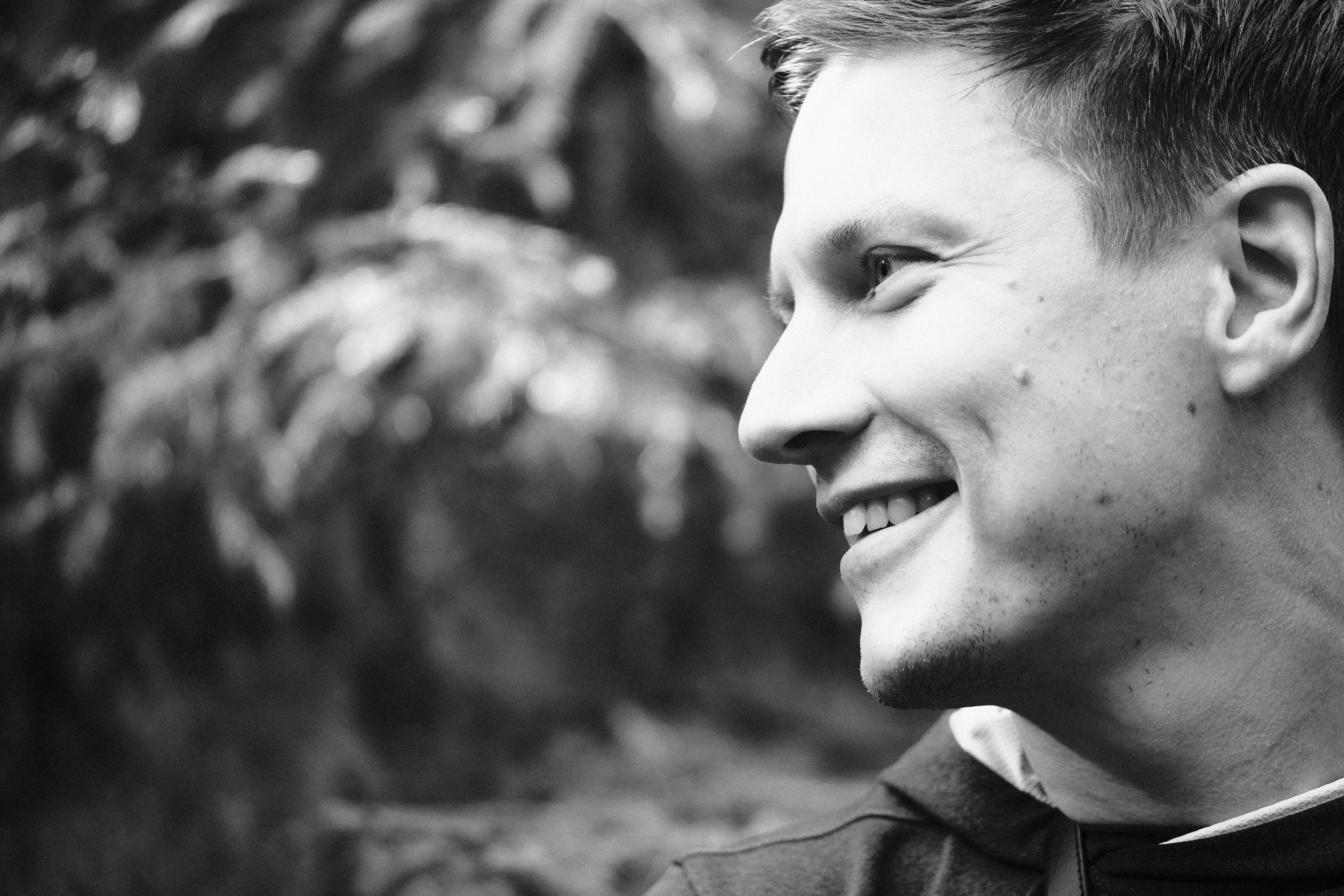
Sami Paju is a coach, trainer and published author based in Finland, specialising in effectiveness, productivity, and sustainable ways of working in knowledge-intensive environments.